Visit Gjirokaster: Guide to Albania’s Stone City (2026)

Known as Albania’s city of stone for the slate-roofed houses, cobblestone streets and historic castle, a visit to Gjirokaster is a must if you are in southern Albania.
I’ve loved my trips to Gjirokaster, but be prepared for lots of steep walking. The old town is built on a mountain side – there’s lots of stairs and steep, cobblestone streets. Good walking shoes are essential!
Despite the demanding walking, you should make an effort to visit Gjirokaster. It’s one of Albania most beautiful historic towns and a UNESCO World Heritage Site.
Visit Gjirokaster: Guide to Albania’s Stone City
In this guide I’ll share everything you need to know to plan your visit – how to get there, what to see, where to eat, the best hotels and where to go after Gjirokaster.
Want a longer trip? This two week Albania itinerary shows how I fit Gjirokaster in.
Is Gjirokaster Worth Visiting?

Yes, Gjirokaster is worth visiting! Not only is it gorgeous and UNESCO, it has a well preserved centre, 12th century castle and Ottoman era bazaar. Exploring the patterned cobblestone streets and lanes feel like stepping back in time hundreds of years.
The city is also culturally significant as the birthplace of Enver Hoxha (Albania’s communist dictator) and Ismail Kadare, the most revered and famous writer in the country.
Whether you visit for the day or overnight, Gjirokaster is one of the best excursions you can do from Saranda or Ksamil, especially if you are not planning to visit Berat (the other UNESCO historic city).
If you’re trying to decide between Gjirokaster or Berat, read about which one is better here.
Where is Gjirokaster, Albania & Brief History
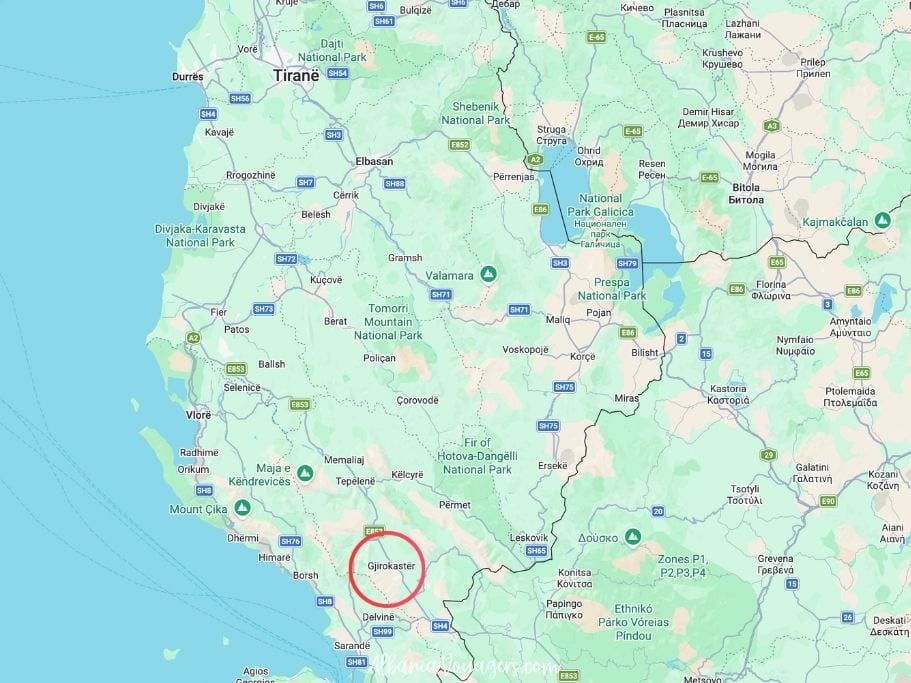
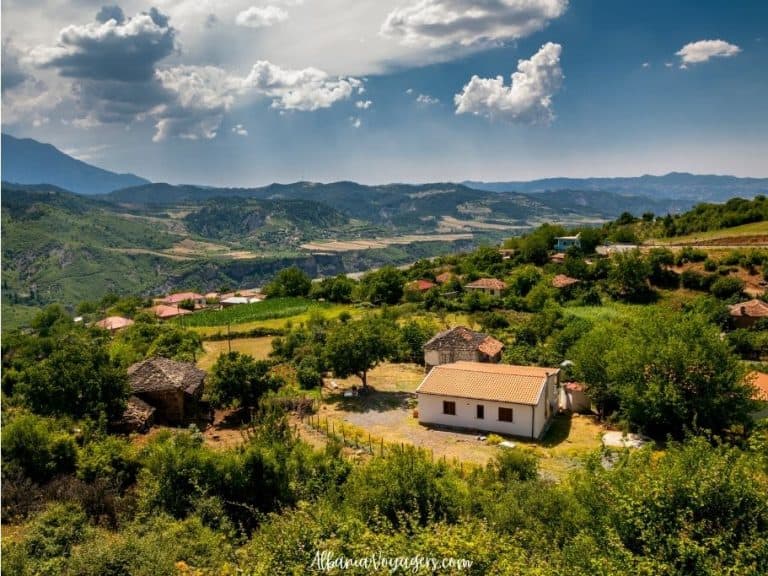
Gjirokaster is a city in the region of southern Albania. The closest main city is Saranda, 34 km away. The town is situated along the slopes of the Gjere Mountains overlooking the Drino River valley. It is very picturesque!
Officially it was founded in the 12th century, but recent archeological finds show it may have been inhabited as far back as the 5th century BC. There are evidence of fortifications from pre Roman, Byzantine and medieval periods.
In the 15th century, Gjirokaster came under Ottoman rule and developed into a thriving regional center. In the 19th century Ottoman ruler Ali Pasha of Tepelena expanded the castle and built an aqueduct, parts of which can still be seen today.
How Long Should You Stay in Gjirokaster?
You should plan on a full day, but overnight would be even better. Gjirokaster is small, but there’s quite a bit to see. If you want to visit some of the sites around Gjirokaster plan on 2 nights.
Gjirokaster is one of the most popular day trip destinations in Albania, and as a result is very busy once the tour groups arrive. If you stay overnight you’ll be able to explore in the morning and evening without the crowds.
If you’re travelling from Tirana definitely stay overnight. It’s a 3 hour drive one way.
How to Get to Gjirokaster

Gjirokaster is easy to reach from Tirana and Saranda by car or bus. I’ve driven both times and the roads were very good. I would prefer to take the bus, but the schedule is not great from Saranda for a day trip.
The first time I went (by private transfer) I stopped at Syri i Kalter on the way back to Saranda. It’s right on the way if the you take the south route on SH99.
Bus
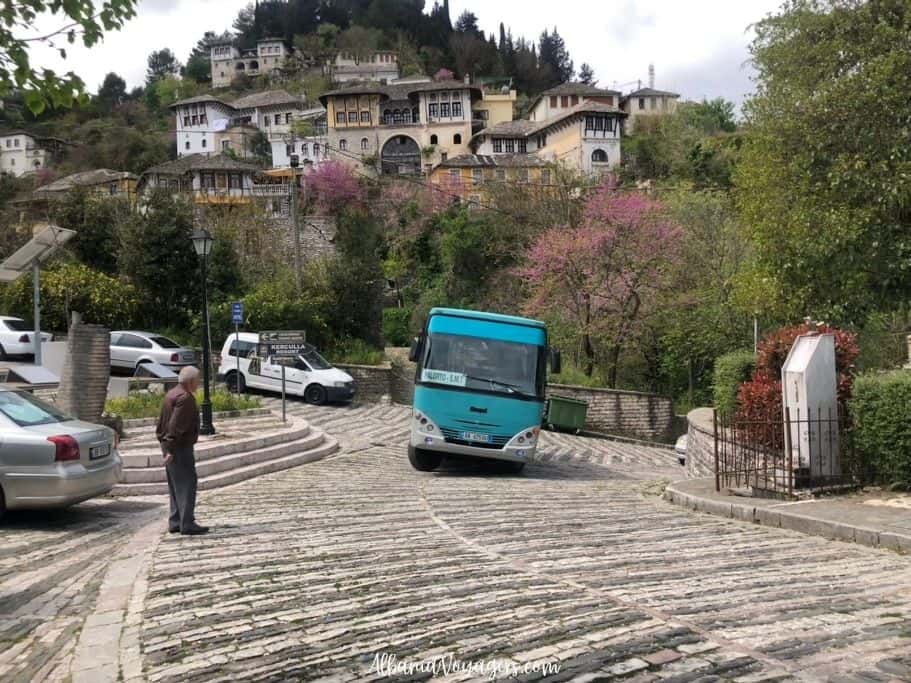
The intercity bus station in Gjirokaster is in the centre (the new centre), 2 km from the historic centre. And it’s uphill all the way. The ‘Palorto’ city bus connects the new town with the old town.
From Saranda there are direct buses twice a day to Gjirokaster at 10:00 am and 2:15 pm. The fare is 600 lek ($7.50 USD). The return is at 1:45 pm and 5:00 pm. It takes just over an hour.
I recommend you verify the departure times at the bus ticket office in Saranda. It’s located at the corner of Rruga Onhezmi and Rruga Falmurit (behind the Basilica Synagogue ruins). There may be fewer or more buses depending on the season.
My daughter took this tour from Saranda that covers Gjirokaster, the Blue Eye and several other sites. She said it was a great day tour and the guides were fantastic:
Blue Eye and Gjirokaster Day Tour
From Tirana there are many daily buses to Gjirokaster from the South North Bus Terminal. The fare is 1450 lek ($18 USD) and the ride is about 3.5 hours.
Taxi (private transfer)
From Saranda the taxi fare is 6000 lek ($72 USD). A return trip would be at least double, and you should verify cost and how much waiting time in Gjirokaster it includes. I use Saranda Eco Taxi for these types of trips from Saranda.
From Tirana the one way fare is 17,000 lek ($204 USD). I don’t recommend doing Gjirokaster as a day trip from Tirana. It’s a 3 hour drive one way. I use Taxi Lux or Taxi Landi for transfers from Tirana.
Rental Car
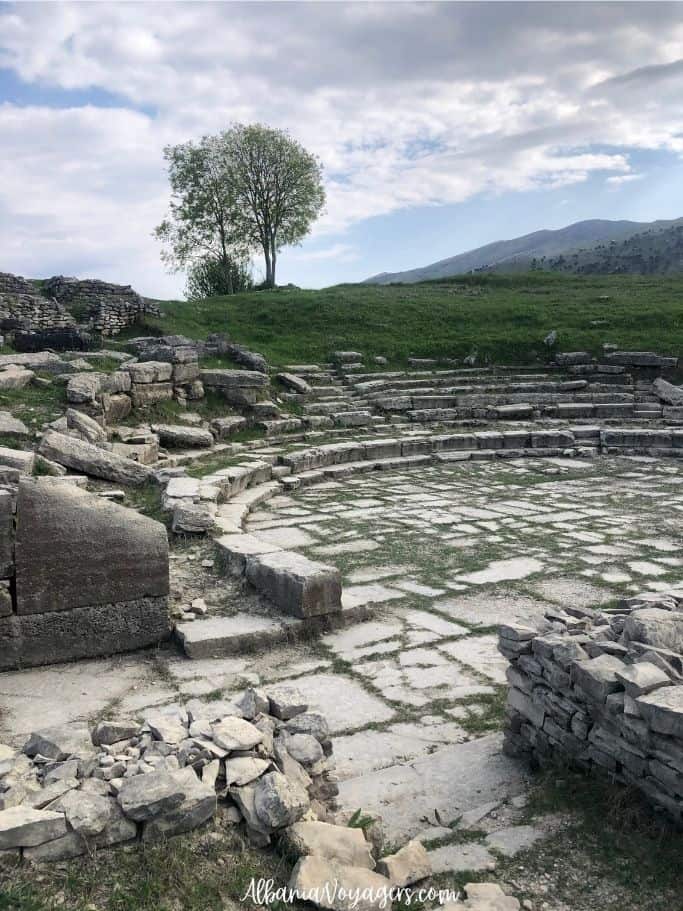
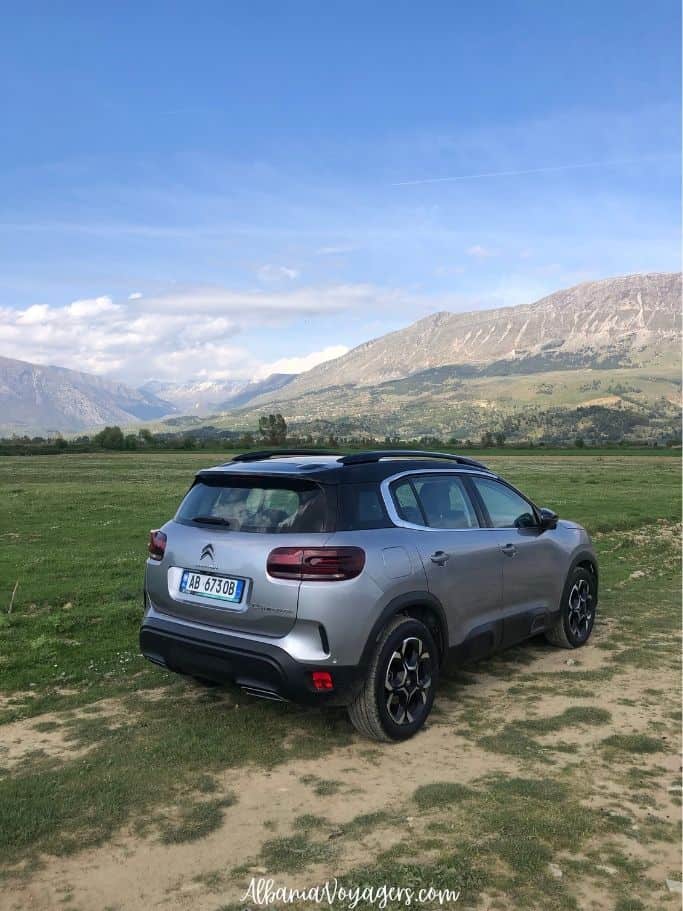
The second time I visited Gjirokaster I rented a car in Saranda. The drive to Gjirokaster is easy – the roads are good and it’s straightforward. There’s also underground public parking near the castle in Gjirokaster. It cost me 300 lek ($3.60 USD) for the whole day.
I do recommend renting a car if you want to visit the region around Gjirokaster. Albania is full of incredible natural beauty, and with a car you’ll have total freedom to explore.
I stopped at the ancient archeological site of Hadrianopolis on my way to back to Saranda, but Syri i Kalter (the Blue Eye) is also on the way back.
Searching for affordable car rental in Albania?
I’ve had good experience with DiscoverCars to hire from local agents. They often have the best rates.
Click here to browse the listings at DiscoverCars.com
Things to Do in Gjirokaster

These are the highlights I recommend based on my visits. But if you’re short on time focus on the castle, bazaar, and one or two historic houses.
1. Gjirokaster Castle
This in the number one attraction of Gjirokaster and rightly so. The castle dominates the mountain skyline and has spectacular views of the town and valley.
Originally built in the 12th century, it was expanded during the Ottoman period. Inside there’s a military museum, old prison cells and armaments. I enjoyed the outside section of the castle more and the views of the watchtower and mountains.
Make this your first stop because there can be lineups to get in once the day tours buses arrive. I actually didn’t visit the castle my second time in Gjirokaster because the lineup was so big (at 11:00 am).
2. Old Bazaar
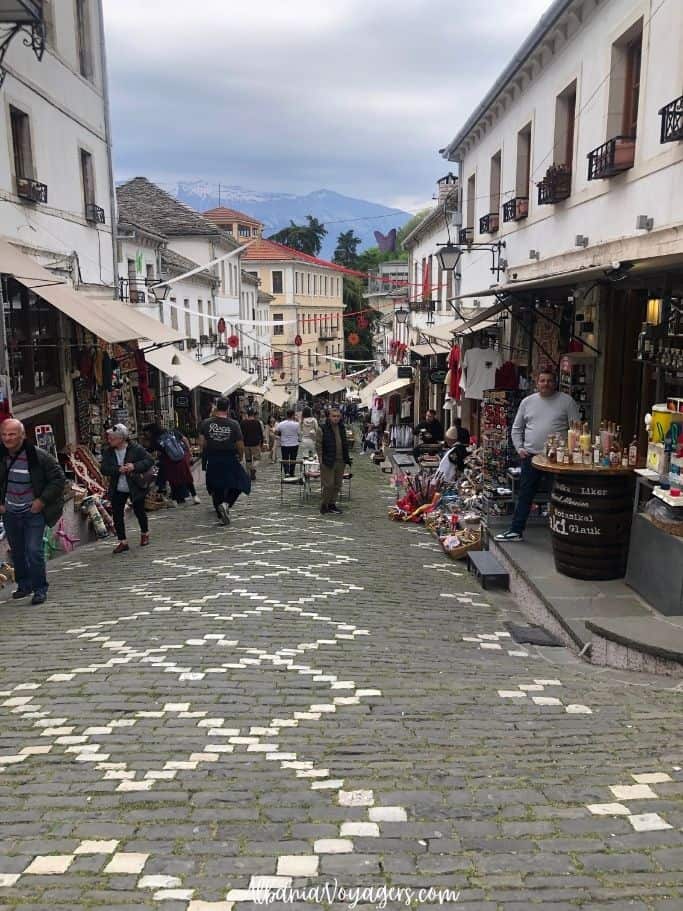
The Ottoman bazaar is the heart of Gjirokaster. It dates back to the 17th century, and is beautifully restored with patterned cobblestone streets and all kinds of restaurants, cafes and shops.
It’s touristy, but still charming and well worth seeing.
3. Skenduli House
One of the best preserved Ottoman era houses, Skenduli House is more than 300 years old and much of it is original. It is the grandest home in Gjirokaster and is still owned by the Skenduli family.
During the communist dictatorship the home was confiscated by the government and turned into the ethnographic museum. After the fall of the regime ownership reverted back to the Skenduli family.
The home is very authentic, and I think the most worthwhile of the historic homes in Gjirokaster. The ‘wedding room’ is really special – make sure you ask to see it (no photos allowed, though).
4. Zekate House
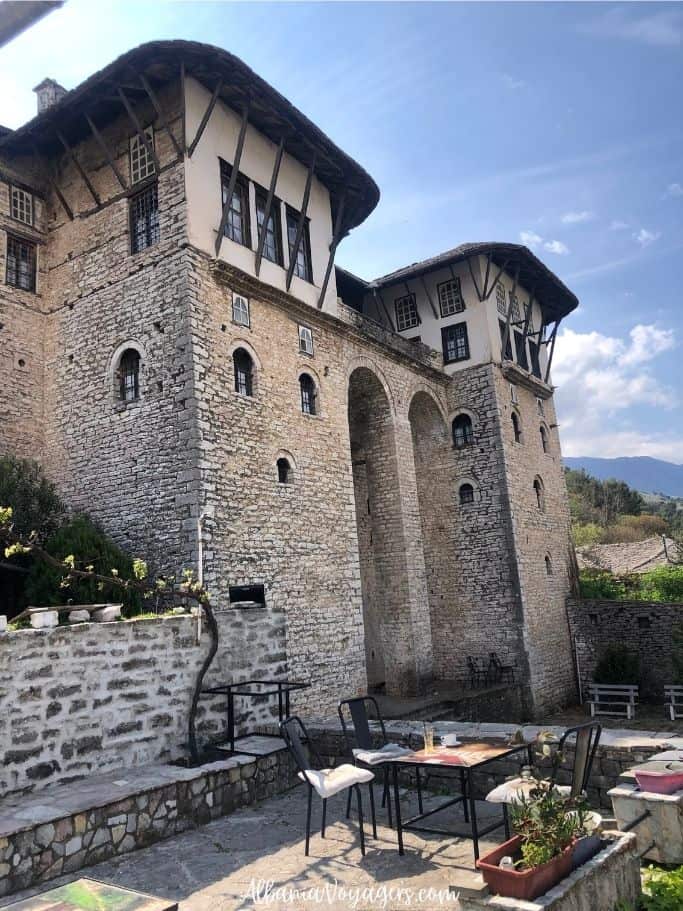
A huge Ottoman mansion that resembles a mini-fortress, Zekate House is worth it just for the amazing views of the town and the Drino River Valley. It was built in 1811 for Beqir Zeko and has the traditional ‘kulla’ (defensive towers).
The interior is very original and mostly empty – but it’s still worth seeing. There’s also a small cafe in the courtyard with beautiful views.
Like Skenduli House, this one was also confiscated by the regime during communism, but the family managed to get it back after the fall of the dictatorship. It is still owned by the family.
5. Ismail Kadare House
This is the childhood home of Ismail Kadare, Albania’s most famous and revered author. The home was built in 1799 and was declared a cultural monument in 1991.
To me, this was a very underwhelming site. Apart from a few rooms, the house has been so extensively renovated it is unrecognizable as a home. If you’re a fan of Kadare you’ll find it interesting, but if not skip this and visit Skenduli House and Zekate House instead.
I’ve been through Kadare’s former apartment in Tirana, which is now a museum. It’s one of the unique things to do in Tirana, but again the state has changed it so much little remains of the original.
6. Ethnographic Museum
The museum is on the site of Enver Hoxha’s (the former communist dictator) former home and birthplace. It was built in 1966 after a fire destroyed the original home.
It’s modeled after typical Gjirokaster homes and filled with traditional items exemplifying Gjirokaster’s history and culture. I read somewhere that the items in the ethnographic museum were confiscated from local families during the communist regime.
I preferred Zekate House and Skenduli House – they were much more authentic and cheaper.
7. Cold War Tunnel
Hidden beneath the castle is a huge bunker built in the 1960s to protect the communist leadership in case of invasion or nuclear attack. There are over 50 rooms in the bunker and it’s 800 metres long.
It’s only accessible by private tour and I’m sure it’s worth it, but I completely forgot to do this. I found another tunnel (on the road that leads to the castle) that went underneath the castle, and did that for free.
8. Gjirokaster Obelisk
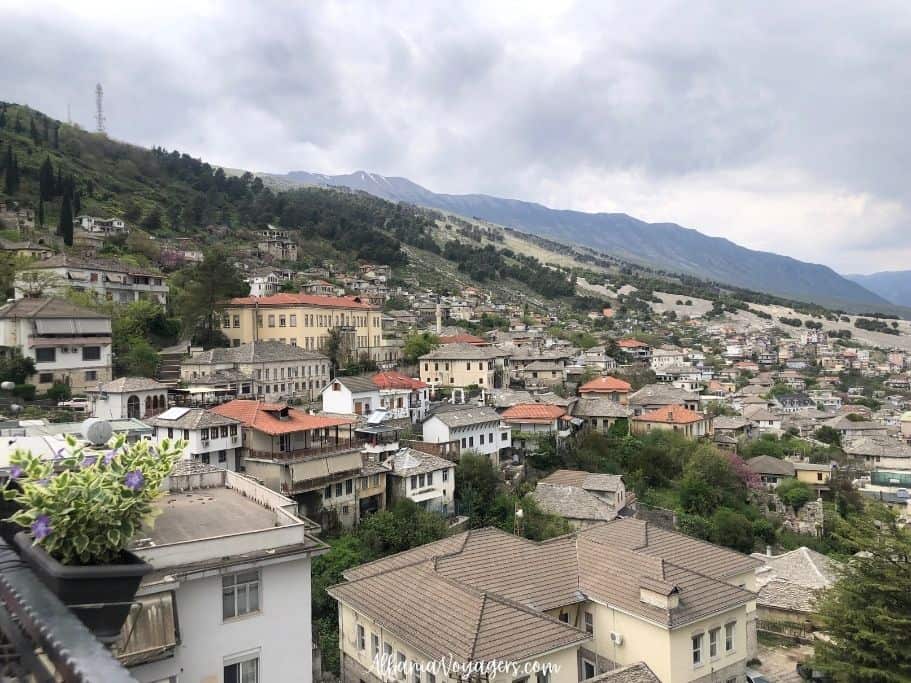
A short uphill walk from the bazaar is the Memedheu ABC (Motherland ABC). The obelisk is at one of the highest points in Gjirokaster, so the views
The monument celebrates the Albanian language, and is built close to the site of the first Albanian school in Gjirokaster. At that time it was very dangerous to teach in Albanian since it was not permitted under Ottoman rule, but Albanians held on to their language.
9. Saint Sotir Church Ruins
Located near the castle is this 17th century Orthodox church. It was heavily damaged during communism, but lately there’s been some restoration work.
It was locked up when I went by, but I’ve heard you can ask at the Tourist Information Centre to get a look inside. There’s supposed to be beautiful icons and a pantrocrator dome.
10. Ali Pasha Bridge
A 2 km hike from the centre of Gjirokaster is a beautiful Ottoman era aqueduct that once supplied water to the castle. It was built in the 19th century and bridges the valley, making a spectacular sight. Daring visitors can cross it on foot.
The hike to the bridge is uphill, so go early and bring water.
11. National Folk Festival
Every 5 years Gjirokaster hosts one of Albania’s most important folk festivals. The last one was held in June 2023.
The festival is held at the castle and attracts international attention for the unique iso-polyphonic singing, which is on the UNESCO intangible heritage list.
The next festival will likely be in 2028. Visiting Gjirokaster during the festival would be an unforgettable experience, and I’m planning on being there.
12. Christmas Festival
I know winter isn’t when most visitors come to Albania, but if you find yourself in Albania in winter, visit the Gjirokaster Christmas Festival.
The stone city looks magical lit up with Christmas lights. Shop for handmade items, try local food and drinks, and enjoy live music.
Festivities usually run from early to mid December until January 8th, just after Orthodox Christmas.
What to Visit Near Gjirokaster
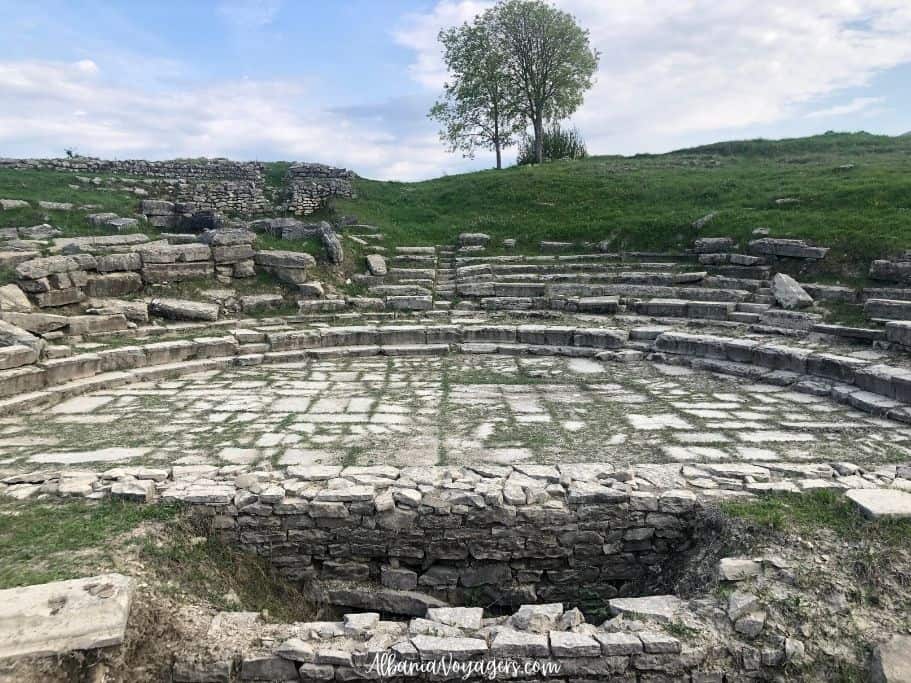
These sites are less than an hour from Gjirokaster and easy to visit either on your way to, or from the city. Except for Viroi Lake, you’ll need transportation to reach them.
This is a very scenic region of Albania, and full of Byzantine, Roman and Greek ruins. There’s lots to see!
Viroi Lake
Viroi Lake is only 4 km from Gjirokaster and there’s a pedestrian path the whole way, so you could walk or bike there.
Like Syri i Kalter (the Blue Eye), Viroi Lake is fed from an underground karst and it’s believed the lake may be connected to Syri i Kalter and other lakes through a series of underwater caves.
I drove past the lake in April, and it looked very murky and low. I’ve heard it can dry up completely in summer, so it might not be worth visiting at that time.
Antigonea Archaeological Park
About 11 km east of Gjirokaster are the ruins of an ancient city from the 3rd century BC, Antigonea.
This is one of Albania’s largest and most prosperous ancient cities, and the park covers an area of 45 hectares. It hardly gets any tourists and is beautiful and peaceful.
Theater of Hadrianopolis
The ruins of a 4th century AD amphitheatre which was part of an ancient Greek town founded in the 5th century BC. Other ruins at the site are Roman baths, a necropolis and temple. It’s a small site.
It’s just off highway SH4 beside the town of Sofratike, 14 km from Gjirokaster.
Syri i Kalter (the Blue Eye)
One of Albania’s most amazing natural phenomena, this freshwater spring gets its name from the vibrant colours of the water, which resemble a human eye. Syri i Kalter is at least 50 metres deep, but nobody knows the true depth.
I stopped here on my way back to Saranda from Gjirokaster, it’s about a 45 minute drive.
Food & Where to Eat in Gjirokaster
Gjirokaster has some unique dishes you won’t find anywhere else in Albania.
Traditional Foods to Eat in Gjirokaster:
- Qifqi: Herbed rice balls that are cooked in a special pan (a qifqi pan). It’s usually an appetizer. This is the most famous dish of Gjirokaster.
- Lakrori me thember: Savoury pie made with filo dough and a filling of meat and vegetables. It has a braided or knotted edge.
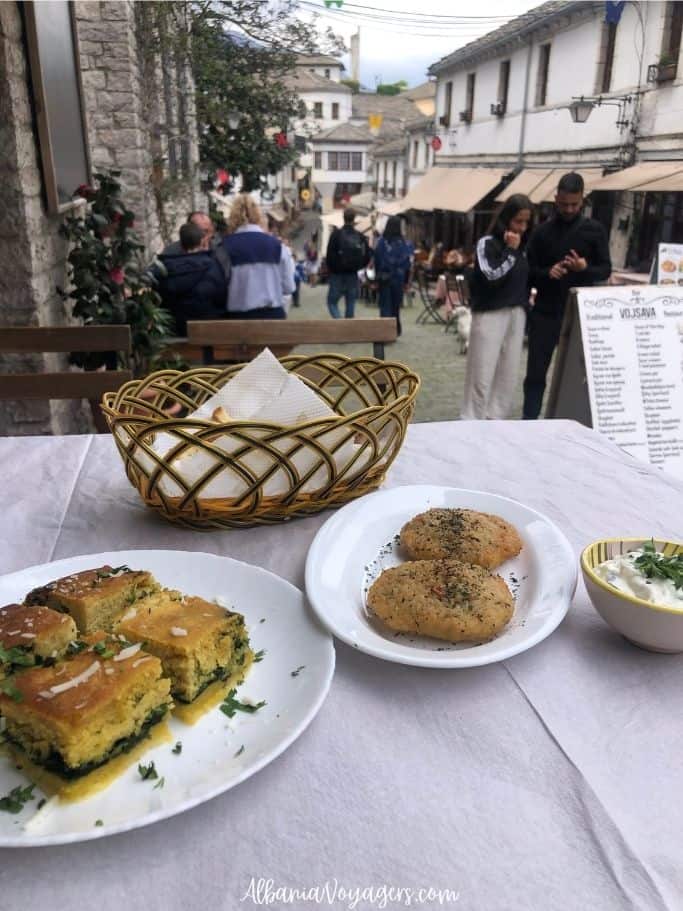
- Byrek qahi: Byrek filled with a mixture of spinach, egg and cheese.
- Shapkat: Cornmeal casserole with spinach, leeks or wild greens (also called pispili in other parts of Albania). The dish originated in Gjirokaster.
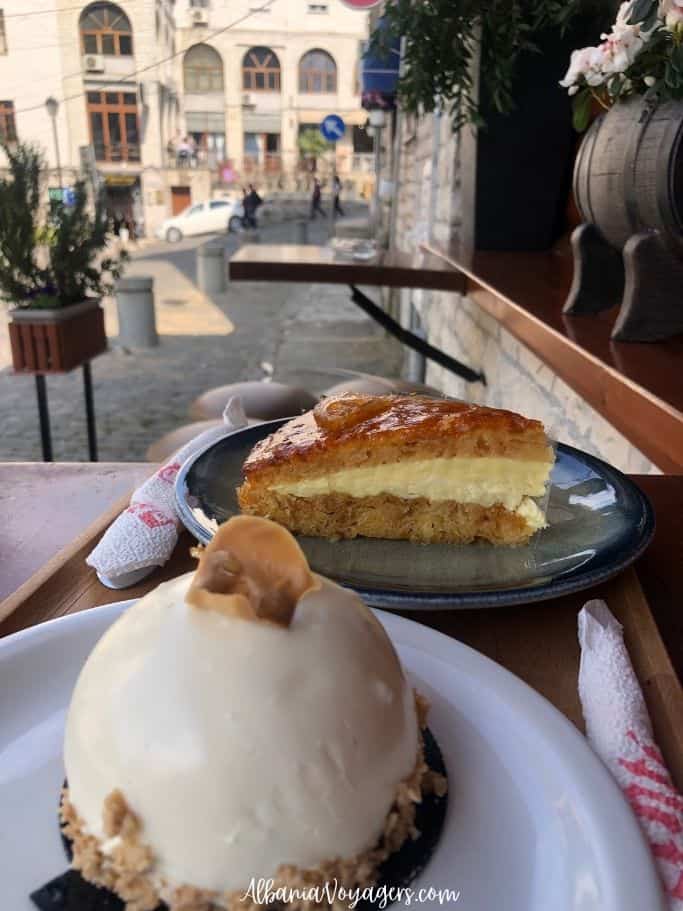
- Oshaf: Sweet custard made of sheep’s milk and dried figs, baked in the oven and finished with a crisscross of cinnamon. Mapo Restaurant has it.
Where to Eat in Gjirokaster:
- Corner of Bazaar: My favourite Gjirokaster restaurant. They make excellent traditional food and have a lovely outdoor terrace with mountain views. Plenty of vegetarian options also. Consider making a reservation – this place can get busy.
- Vojsava Restaurant: Traditional food and excellent service on one of the lovely cobbled streets in the Old Town. Lots of vegetarian options.
- Antigonea 2000: Very good bakery with pastry, ice cream, cookies, croissant and coffee.
Where to Stay in Gjirokaster
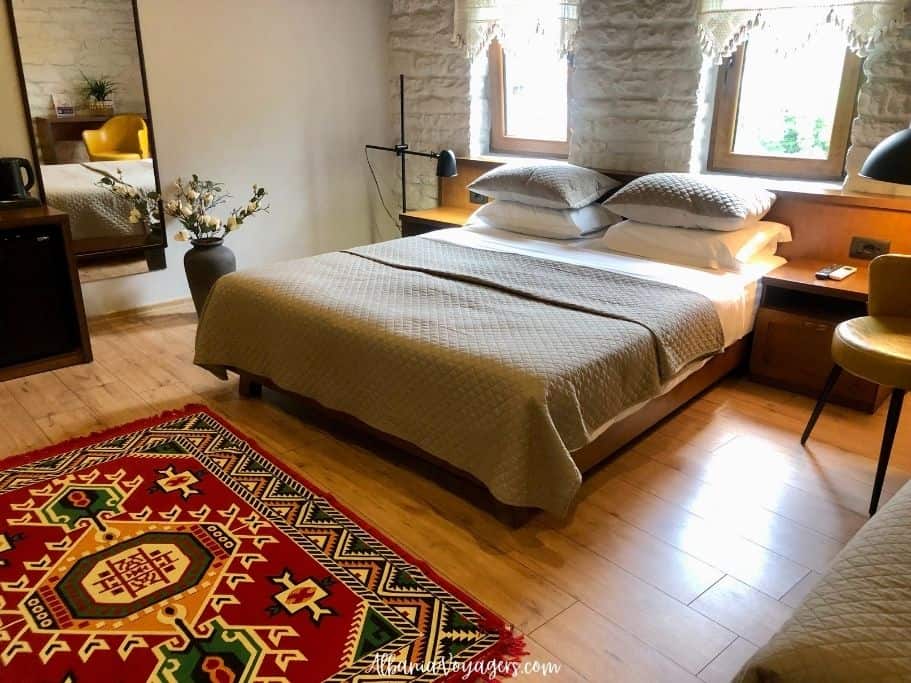
When you visit Gjirokaster it’s best to stay in the historic centre, but not right by the Ottoman Bazaar. That is the busiest tourist area of town.
These are very well located hotels and guest houses:
- Hotel Gjirokastra: Charming boutique property in a traditional Ottoman style mansion steps from the museum and castle. Doubles from $65 USD, including breakfast. My favourite Gjirokaster hotel. Large rooms and a swimming pool make this a good choice for families.
- The Stone Sky Hotel: Excellent small hotel in the Old Town. Doubles from $60 USD, including breakfast. Beautiful terrace with mountain views.
- Guest House Mele: Cozy family run guest house located in the Old Town, but away from the busy tourist zone. Doubles from $45 USD, including breakfast. Swimming pool. Peaceful location and beautiful outdoor terrace for breakfast.
Quick Tips for Visiting Gjirokaster
Book accommodation in advance, especially if arriving in summer. Gjirokaster is one of the most popular mountain towns in Albania.
Cash is king. Like the rest of Albania, cards are not accepted everywhere. It’s essential to carry local currency (Albanian lek). Some places will accept euros, but there’s no guarantee.
Summer is hot. Even though it’s in the mountains, Gjirokaster can experience very high inland heat (40C or 104F). Plan to explore in the mornings and evenings, and book a hotel with a pool if coming in July or August.
Wear walking shoes. The roads are steep and cobblestoned in the Old Town – not great for heels or flip flops.
The bus stop is 2 km from the Old Town. If you’re arriving by bus you will have to walk to get to the Old Town (uphill).
You can’t drink the tap water. It’s fine for bathing and brushing teeth.
Don’t flush the toilet paper. There’s always a bin.
Read more Albania travel tips here (including driving, safety & health)
Where to Go After Visiting Gjirokaster

Saranda, Ksamil, Permet and Korce are great places to visit after Gjirokaster. They’re all in southern Albania and won’t take long to reach. You can get to them by bus or car.
Saranda and Ksamil are on the coast, Permet and Korce are inland.
Saranda
Saranda is considered the capital of the Albanian Riviera. It’s a small but pretty seaside city hugging the Ionian Sea. It’s a complete change of pace from Gjirokaster with its laid back Mediterranean vibe, seafront promenade and beaches.
In summer it’s busy, so book a place to stay in Saranda before arriving. Shoulder season is the perfect time to visit, when many nomads choose Saranda as a slow travel destination.
Saranda is a great base for visiting Ksamil and Butrint National Park.
Ksamil
Ksamil is the beach paradise of Albania. If all you want to do is beach hop and eat and drink by the beach, Ksamil is perfect. Apart from Butrint National Park, there’s no real cultural sites in Ksamil or nearby.
It used to be considered a hidden gem, but that is no longer the case. Ksamil is crowded in the summer and the most expensive holiday destination in Albania – but compared to other Mediterranean hotspots, it’s still a bargain.
Permet
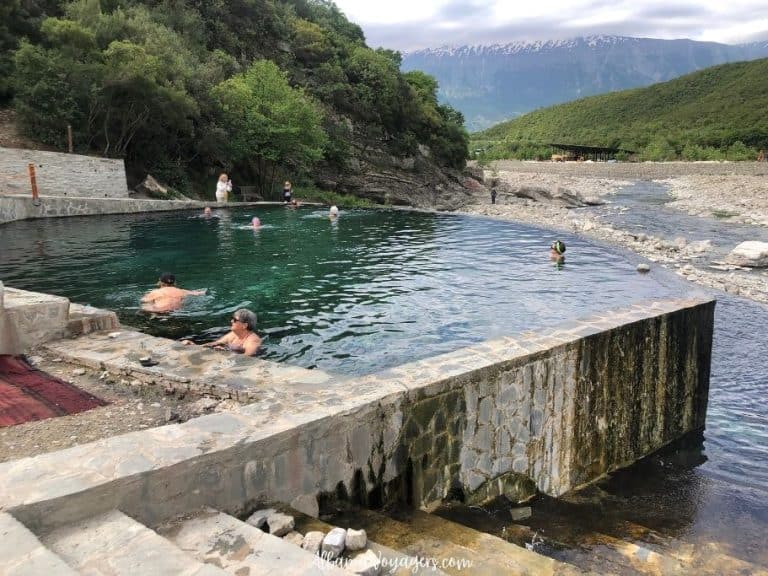
Roughly 1.5 hours away, Permet is a small city known for slow food, adventure tourism and stunning mountain scenery. Benja Thermal Baths and Lengarica Canyon, two of the best things to see in Albania, are very nearby.
Permet is busier in summer during peak season, but in general this area is off the beaten path and well worth exploring. The whole area along the southern border with Greece is beautiful and has a lot of history.
Here’s more about Permet and if it’s worth visiting.
Korce
Known as Albania’s cultural capital, Korce is a charming small city, easy to explore and off the beaten track.
Korce is famous for its beautifully restored historic bazaar, and for beer! Korce is home of Birra Korca, Albania’s oldest and most famous beer brand. Visit the Birra Korca factory and do a tasting in the beer garden, which also happens to be one of the best places to eat in Korce.
It’s 189 km from Gjirokaster and the drive is just under 4 hours. Stop at Permet on the way for a break. This part of Albania does not get the attention it deserves – which is great for anyone willing to explore it.
If you’d like to know more, read my Korce travel guide.
Last Words on Visiting Gjirokaster: Albania’s Stone City
A visit to Gjirokaster is a must if you are in southern Albania. Not only is the stone architecture unique, it’s an important historical town, cultural destination and a UNESCO World Heritage Site. It really is one of Albania’s most beautiful cities.